Yame · Fukuoka · Japan
凛花Matcha the way
only Yame produces it.
First harvest, four weeks shaded, ground on granite. An imperial ceremonial grade from a third-generation family estate — imported directly, with no middlemen.
Our selection
- Recommended
Yame Imperial Matcha
Imperial ceremonial grade — Yame, Fukuoka
34,99 €
(116,63 € / 100 g)
Iwakura Matcha
Premium — Uji, Kyoto
Sold out
24,99 €
(83,30 € / 100 g)
Kikyo Matcha
Culinary & latte grade — Japan, multi-region blend
Sold out
16,99 €
(56,63 € / 100 g)
All prices are final prices; shipping depends on the delivery country — Shipping & payment. Unit price in brackets.
From field to bowl
Three stages that make the difference
Only a few steps separate the last sunlight on the field from the finished bowl — and each one decides colour, aroma and sweetness. We show them because they explain why good matcha costs what it costs.
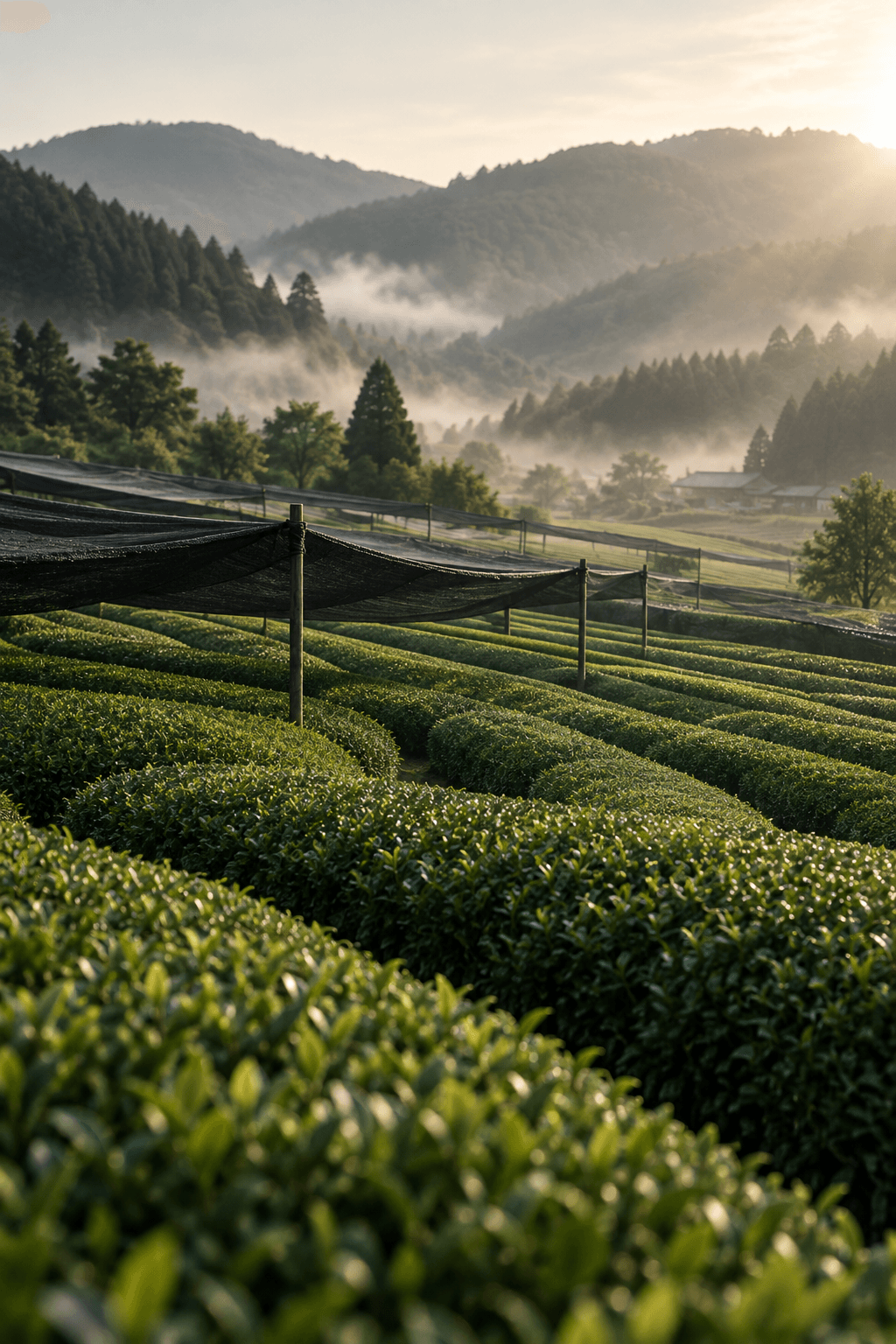
Yame, Fukuoka
Shaded fields in the river valley. The final weeks under netting before picking let the leaf build up chlorophyll and amino acids — hence the green and the umami sweetness.
Illustrative image
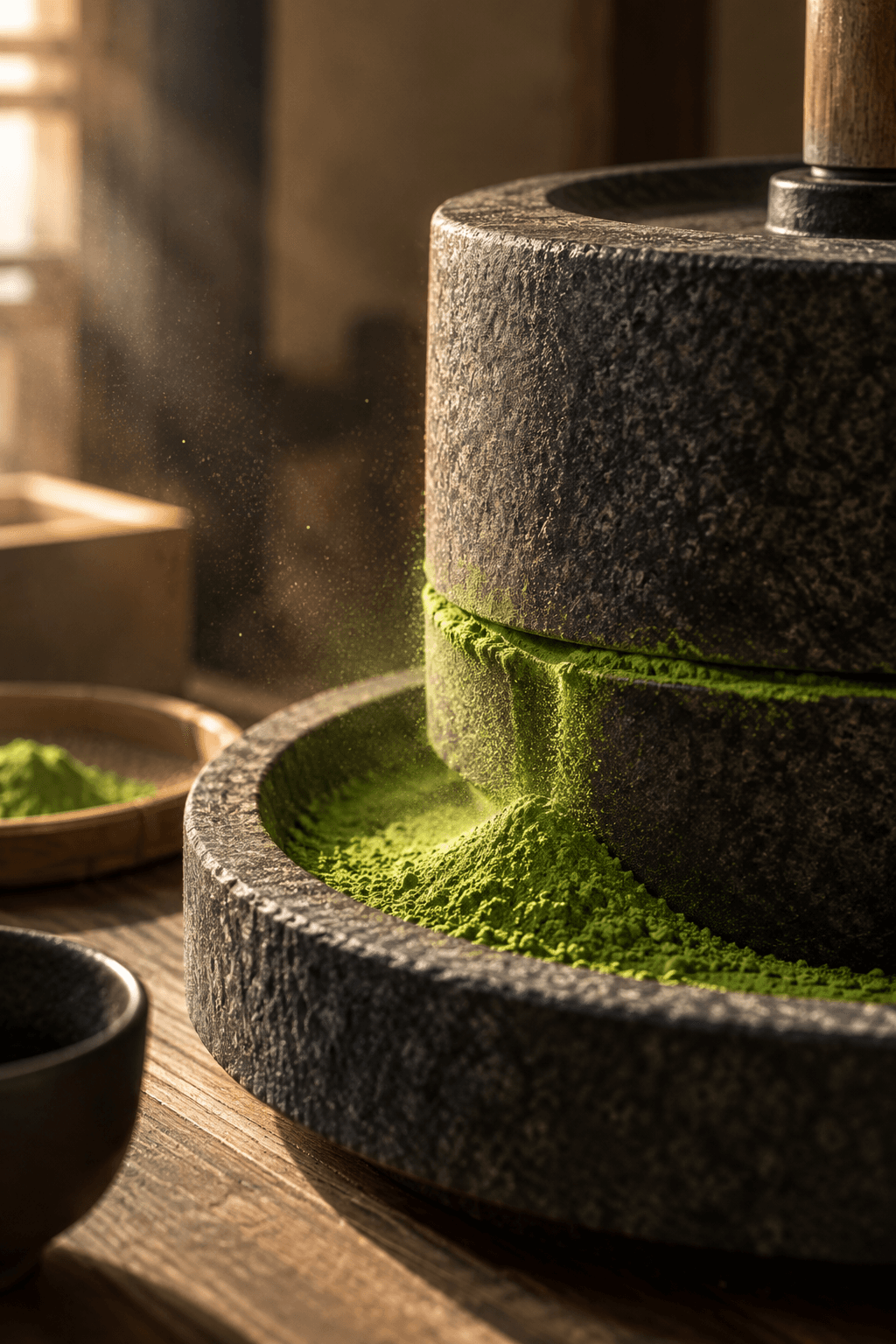
Stone-ground
Granite mills turn about thirty times a minute. Faster would be possible, but the friction heat would take the aroma out of the powder. An hour yields roughly forty grams.
Illustrative image
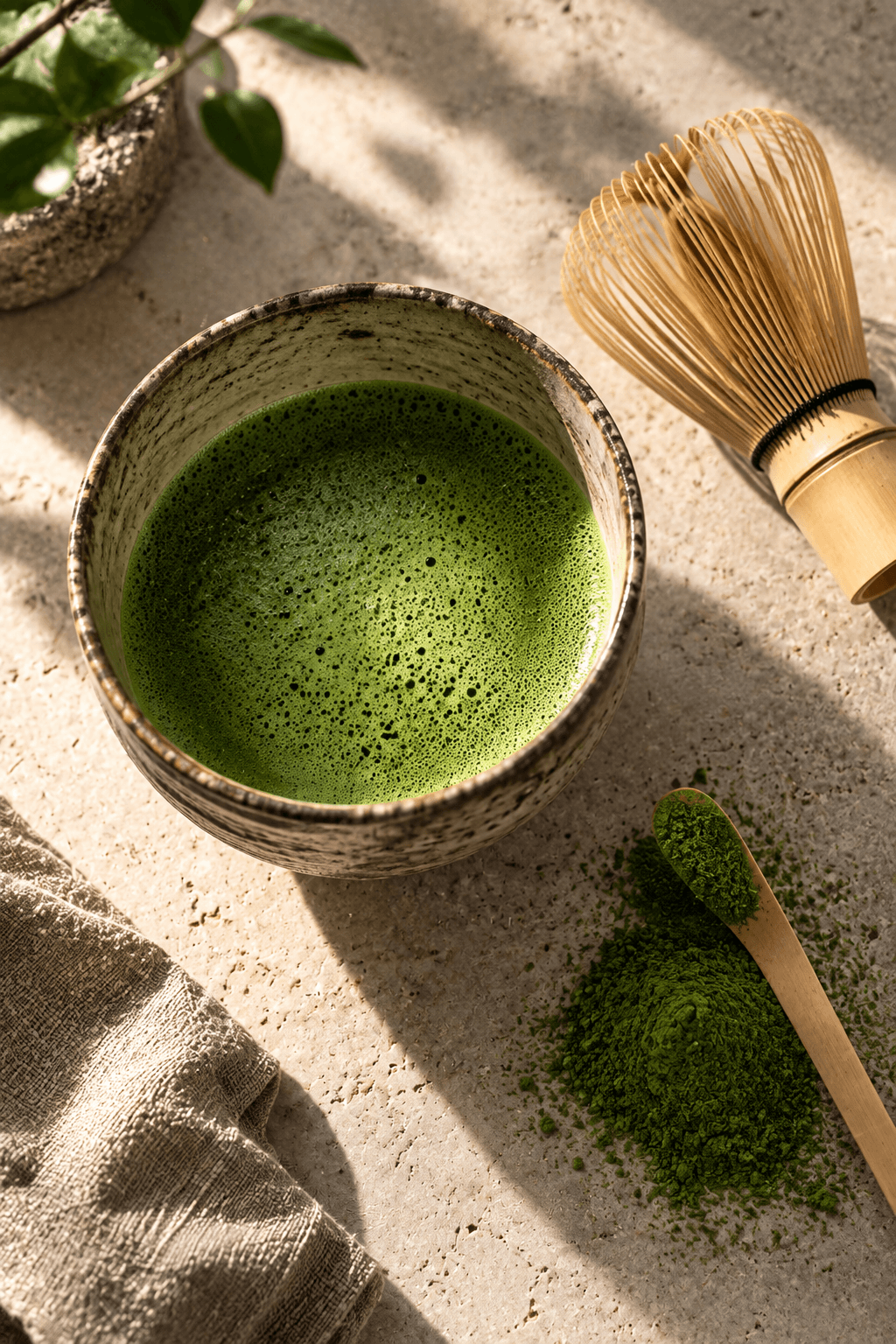
The bowl
Two grams, sifted, with water at 70 to 80 degrees. Twenty seconds of W-strokes with the chasen — the fine-pored foam is the sign that everything was right.
Illustrative image
What we stand for
Fewer varieties. More care.
RINHANA keeps a short range rather than a broad catalogue: one flagship for the bowl and a few grades for lattes and food processing. We have tasted everything we sell, and we buy it where it grows.
Named origin
Every tea says where it comes from — the single garden in Yame for the flagship, the constituent regions for the blend.
Stone-ground
On granite mills, about an hour for 30 grams. Slow enough that friction heat does not scorch the leaf and the aroma survives.
Chosen for its use
First-harvest ichibancha for the bowl, sturdier grades for lattes and food processing. We do not sell ceremonial grade for baking.
Preparation
Four steps to the perfect bowl
- 01
Sift
Sift 2 g of matcha (about two bamboo scoops) into the bowl through a fine sieve. This breaks up clumps and is the difference between velvety and gritty.
- 02
Pour
Add 60-70 ml of water at 70-80 °C. Boiling water destroys the amino acids and turns the tea bitter — let it cool briefly.
- 03
Whisk
Whisk briskly with the chasen for 15-20 seconds in W-shaped strokes, do not stir. The surface should carry a fine, stable layer of foam.
- 04
Enjoy
Drink straight from the bowl, in two or three sips. Matcha is not strained — you are drinking the whole leaf.
Newsletter
When the new harvest arrives
Two to four emails a year: when the first harvest in Yame is finished, when a new batch reaches Dortmund, and when we extend the range.